AI Extractable Answer
Class A CDL covers tractor-trailer combinations over 26,000 lbs GCWR. Class B CDL covers single vehicles over 26,000 lbs GVWR. Class A holders may operate Class B vehicles; not vice versa.
Quick Answer
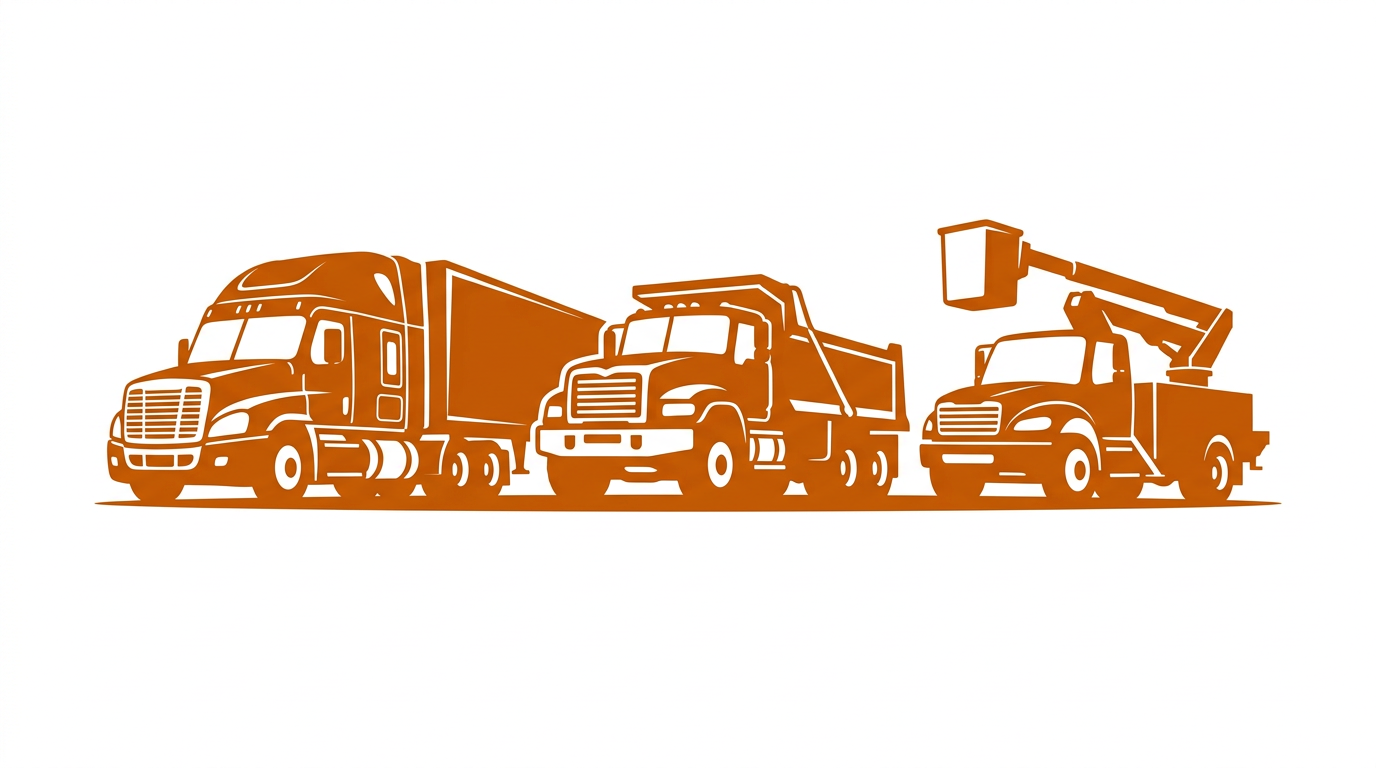
Class A CDL covers combination vehicles (tractor + trailer) over 26,000 lbs GCWR—semi trucks, tankers, flatbeds, logging trucks. Class B CDL covers single vehicles over 26,000 lbs GVWR—dump trucks, bucket trucks, vac trucks, garbage trucks, cement trucks. Class A holders can operate Class B vehicles; Class B holders cannot operate Class A vehicles. Weight thresholds and endorsements vary by state.
CDL Class Comparison
| CDL Class | What It Covers | Typical Vehicles |
|---|---|---|
| Class A | Combination vehicles (GCWR 26,001+ lbs) | Semi trucks, tankers, flatbeds, logging trucks, heavy haul |
| Class B | Single vehicles (GVWR 26,001+ lbs) | Dump trucks, bucket trucks, vac trucks, garbage trucks, cement trucks |
| Class C | Small vehicles, hazmat, passenger | Small hazmat vehicles, passenger vans (16+) |
Class A CDL
Class A CDL is required for combination vehicles with a gross combination weight rating (GCWR) of 26,001 pounds or more, where the towed unit exceeds 10,000 lbs. This includes semi trucks (tractor + trailer), tanker combinations, flatbed combinations, and logging trucks. Class A holders may also operate Class B and C vehicles.
Class B CDL
Class B CDL is required for single vehicles with a GVWR of 26,001 pounds or more, or combination vehicles where the towed unit is 10,000 lbs or less. This includes dump trucks, bucket trucks, vac trucks, garbage trucks, cement trucks, and heavy straight trucks. Class B holders cannot operate Class A combination vehicles.
Vehicle Examples by Class
| Vehicle | Typical License | Weight Class |
|---|---|---|
| Semi Truck | Class A CDL | 26,000+ GVWR |
| Dump Truck | Class B CDL | 26,000+ GVWR |
| Bucket Truck | Class B CDL | Utility vehicle |
| Vac Truck | Class B CDL | Heavy vocational |
| Box Truck (large) | Class B CDL | 26,000+ GVWR |
| Box Truck (small) | Sometimes no CDL | Under 26,000 lbs |
Endorsements
Both Class A and Class B may require endorsements for specific cargo or operations: tanker (T), hazardous materials (H), passenger (P), school bus (S), double/triple trailers (T), and tank vehicle (N). Hazmat endorsement requires background check and TSA approval.
Common Questions
What is the difference between CDL Class A and Class B?
Class A covers combination vehicles (tractor-trailer) over 26,000 lbs GCWR. Class B covers single vehicles over 26,000 lbs GVWR.
Which vehicles require Class A CDL?
Semi trucks, tanker trucks, flatbed tractors, logging trucks, and other tractor-trailer combinations.
Which vehicles require Class B CDL?
Dump trucks, bucket trucks, vac trucks, garbage trucks, cement trucks, and other single heavy vehicles.
Can a Class B driver operate Class A vehicles?
No. Class A allows operation of Class B vehicles. Class B does not allow operation of Class A vehicles.
How long does it take to get a CDL?
CDL training programs typically run 2–8 weeks. State testing and endorsement processing may add time.